
Smart from the Start: How Intelligent Lighting Is Changing the Way Luxury Homes Are Wired
A New Era of Home Wiring in the Hamptons
Across the Hamptons and New York’s most established neighborhoods, homeowners are choosing intelligent lighting to support thoughtful design, daily ease, and long-term flexibility. The challenge is that the way many homes are still designed and bid hasn’t fully evolved to support it.
Too often, architectural and electrical plans default to conventional wiring—every fixture tied to a local switch. When intelligent systems such as Lutron HomeWorks or Control4 are introduced later, electricians are forced to reprice and rework infrastructure mid-build.
The result is familiar: delays, change orders, and missed opportunities to design more efficiently from the start.
Not to mention the cost and hassle of ripping into walls and ceilings to add wiring that could have easily been installed while those areas were open and accessible.
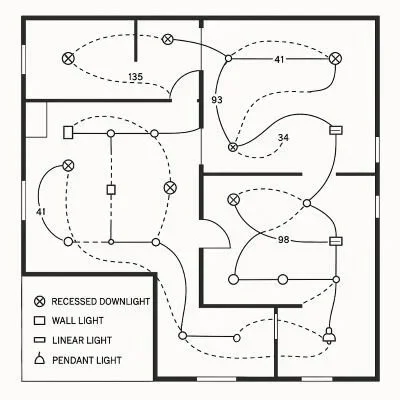
Intelligent Lighting: The Future of Wiring Luxury Homes
Intelligent Lighting vs. Conventional Wiring: What’s the Difference?
In a conventionally wired home, each light is hardwired to a switch. This requires longer wire runs, more wall boxes, and locks in decisions early—once drywall goes up, flexibility disappears.
Intelligent lighting systems take a different approach. Loads are routed to centralized panels and controlled digitally through refined keypads or apps. One keypad can manage multiple scenes, rooms, or even the entire home.
This approach allows for:
Fewer wire and conduit runs
Cleaner, more intentional wall layouts
Greater freedom for architects and interior designers
Seamless coordination with shades, audio, and climate systems
The infrastructure is simpler. The experience is richer.
Why Early Planning Matters
When intelligent lighting is introduced late, electricians are often bidding twice—once for conventional wiring, then again for centralized control. At that stage, infrastructure savings are rarely credited back.
When intelligent lighting is specified early:
Electricians can bid accurately from day one
Builders avoid costly revisions and delays
Architects protect their design intent
Homeowners gain clear, realistic budgets
With proper planning, intelligent lighting can be cost-neutral compared to traditional wiring once reduced materials and labor are factored in.
Best Practices for a Smoother Process
Architects
Include an Intelligent Lighting Infrastructure Option in your drawings. This signals intent early and encourages coordination.
Builders
Request paired bids—one conventional, one intelligent. Clear comparisons prevent surprises later.
Electricians
Engage lighting control specialists during design. Accurate layouts lead to cleaner installs and more predictable margins.
Designers & Homeowners
If intelligent lighting is part of the vision, make it part of the initial scope. Early decisions are always more efficient.
A Smarter Way to Budget
To support more accurate planning, we’ve developed a Quick Budget Calculator for builders and electricians. It compares:
Conventional wiring with standard switches
Conventional wiring with smart switches
Centralized intelligent lighting with standard fixtures
Intelligent downlighting systems
Intelligent downlighting combined with linear lighting
The calculator provides realistic per-square-foot ranges based on home size, fixture mix, and labor assumptions.
(For a demo or downloadable copy, contact Home Technology Experts.)
Real-World Example
For a typical 5,000 sq. ft. Hamptons new build:
Conventional wiring sets the baseline
Smart switches add roughly 10–15%
A centralized intelligent system often nets out similarly once wiring efficiencies are included
Intelligent fixtures and linear lighting increase upfront investment but deliver greater design flexibility and long-term value
Designed correctly, intelligent lighting is not a premium—it’s a smarter allocation of resources.
The Homeowner’s Advantage
For homeowners in the Hamptons, Nassau County, and Manhattan, intelligent lighting delivers:
Simple, intuitive control through keypads or apps
Reduced energy use through dimming and occupancy sensing
Easy future changes without rewiring
Strong appeal to luxury buyers and renters
The technology stays in the background. The experience does not.
The Bottom Line
Intelligent lighting works best when it’s specified early. It simplifies construction, protects design intent, and creates better outcomes for everyone involved.
At Hamptons Lighting Design, we collaborate closely with architects, builders, and electricians to integrate intelligent lighting thoughtfully—from early budgeting through final programming.
Design it smart from the start.
Ready to Elevate Your Next Project?
If you’re planning or bidding a home in the Hamptons, Manhattan, or Nassau County, we can help you:
Price intelligent lighting with confidence
Simplify coordination across trades
Deliver refined, future-ready homes
Contact our sister company, Home Technology Experts, to learn more about intelligent lighting design and Lutron HomeWorks or Control4 integration.
Explore our Lighting Design Services
Learn about Lutron HomeWorks
Book a Smart Home Consultation